

What to see in Isola
Isola is a neighborhood to live in, between art, markets, good food, tradition and modernity. Here's what you shouldn't miss.
Isola isn’t a neighborhood you see in passing: it’s a place you live in. During the day the shops, the markets and the galleries set the rhythm, with locals doing their shopping and stopping to chat under the trees. In the evening the same streets fill with tables and the music comes out through open doors.
There’s no museum at the center of it, and no monument to tick off: the right way to visit Isola is to walk into it without a tight itinerary, turning the corner to see what’s there. What follows is the order we’d do it in, starting from the border with the skyscrapers.
Porta Nuova and the BAM
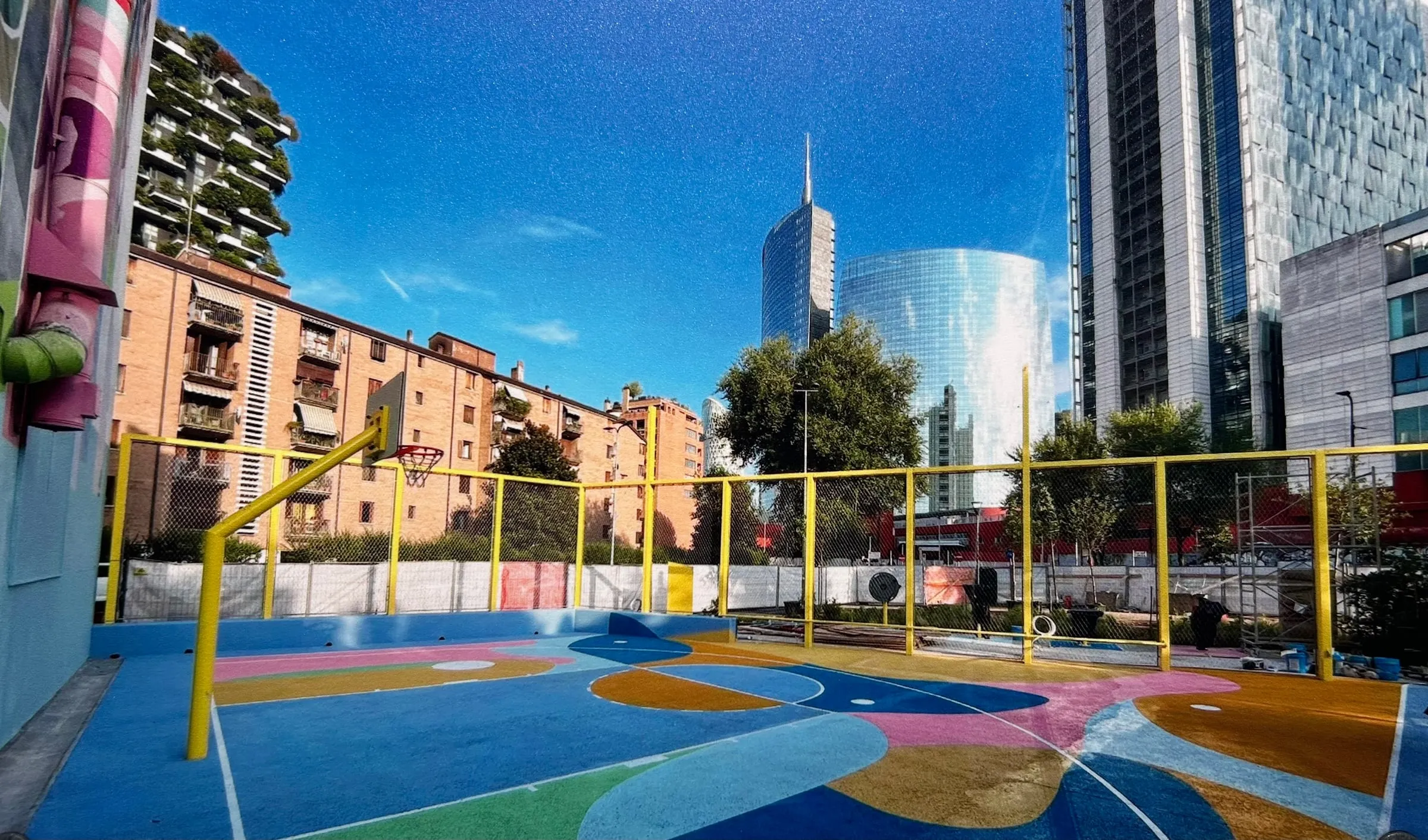
The neighborhood begins where the skyscrapers end, and the two worlds touch within a single block. On one side piazza Gae Aulenti with its glass towers, on the other the low houses of Isola, and in between the Biblioteca degli Alberi, the BAM, the park that holds the two together.
The BAM isn’t just any garden. It’s laid out in circular fields, with more than a hundred species of trees and paths that cross each other instead of following the perimeter, and it’s the spot from which you can look at the Bosco Verticale without craning your neck. You can cross it in twenty minutes walking slowly, and it’s free.
But the thing that really justifies the detour isn’t the park: it’s the contrast. On one side the new buildings, modern but with Italian lines. On the other a balcony house left standing in the middle of it all, murals and all, as a reminder of what this was until fifteen years ago.
Art everywhere
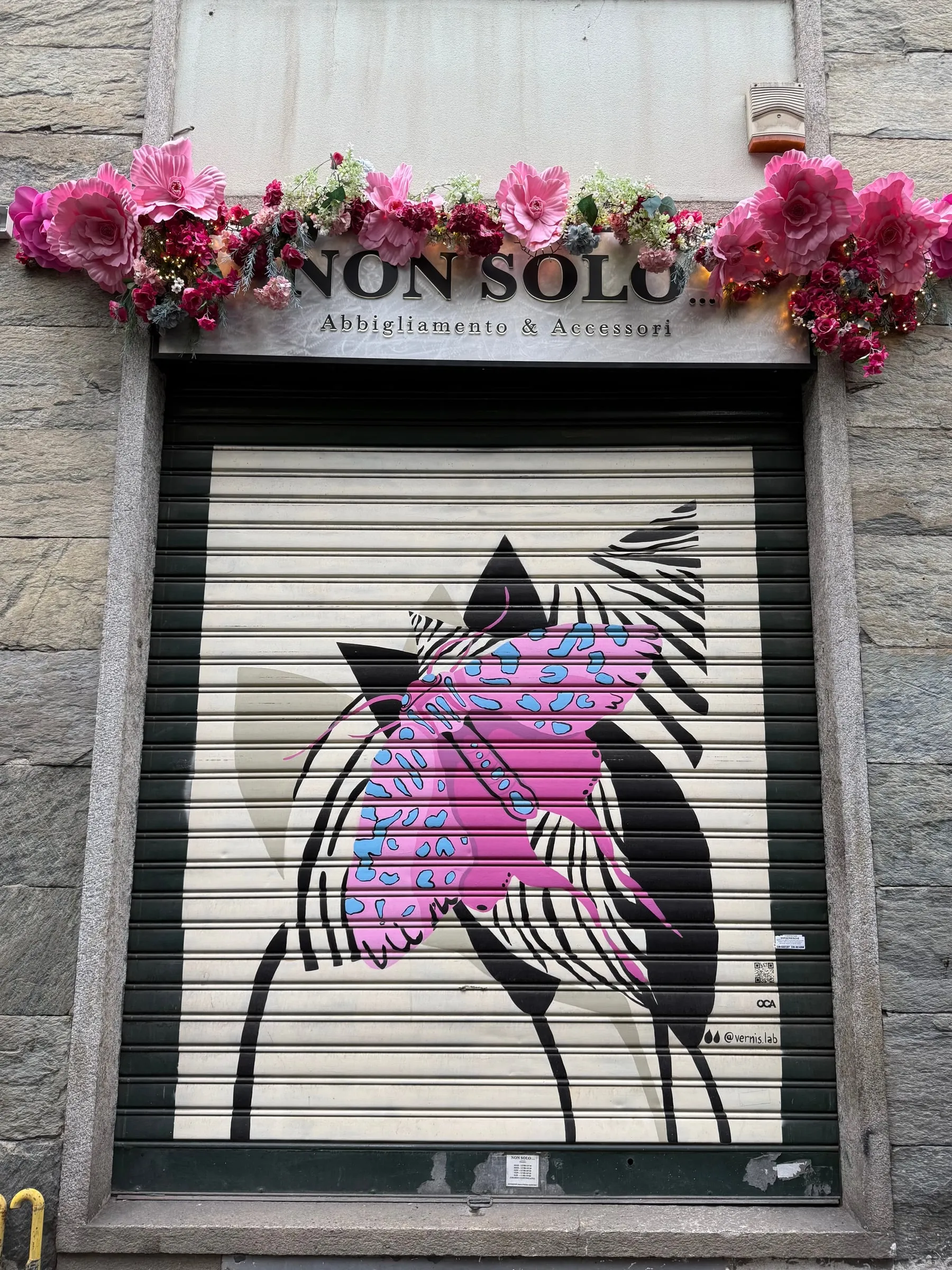
In Isola art isn’t shut away anywhere: it’s on the shop shutters, on the blank walls of the courtyards, on the electrical boxes. It’s the legacy of the years when the neighborhood was the center of Milanese street art, and you look at it while walking, with no ticket and no opening hours — though the painted shutters are only visible when the shops are closed, so on Sundays or late in the evening.
Then there are the actual galleries, small and often with the door ajar: you walk in, you look, you walk out, and nobody comes over to ask you anything. It’s the most relaxed way to see contemporary art anywhere in Milan.
There are several galleries and exhibition spaces in the neighborhood. The two to start with are LUPO — Lorenzelli Projects, at via Borsieri 29, and Luca Tommasi, at via Cola Montano 40. Entry to the galleries is usually free. The exceptions are openings and special events.
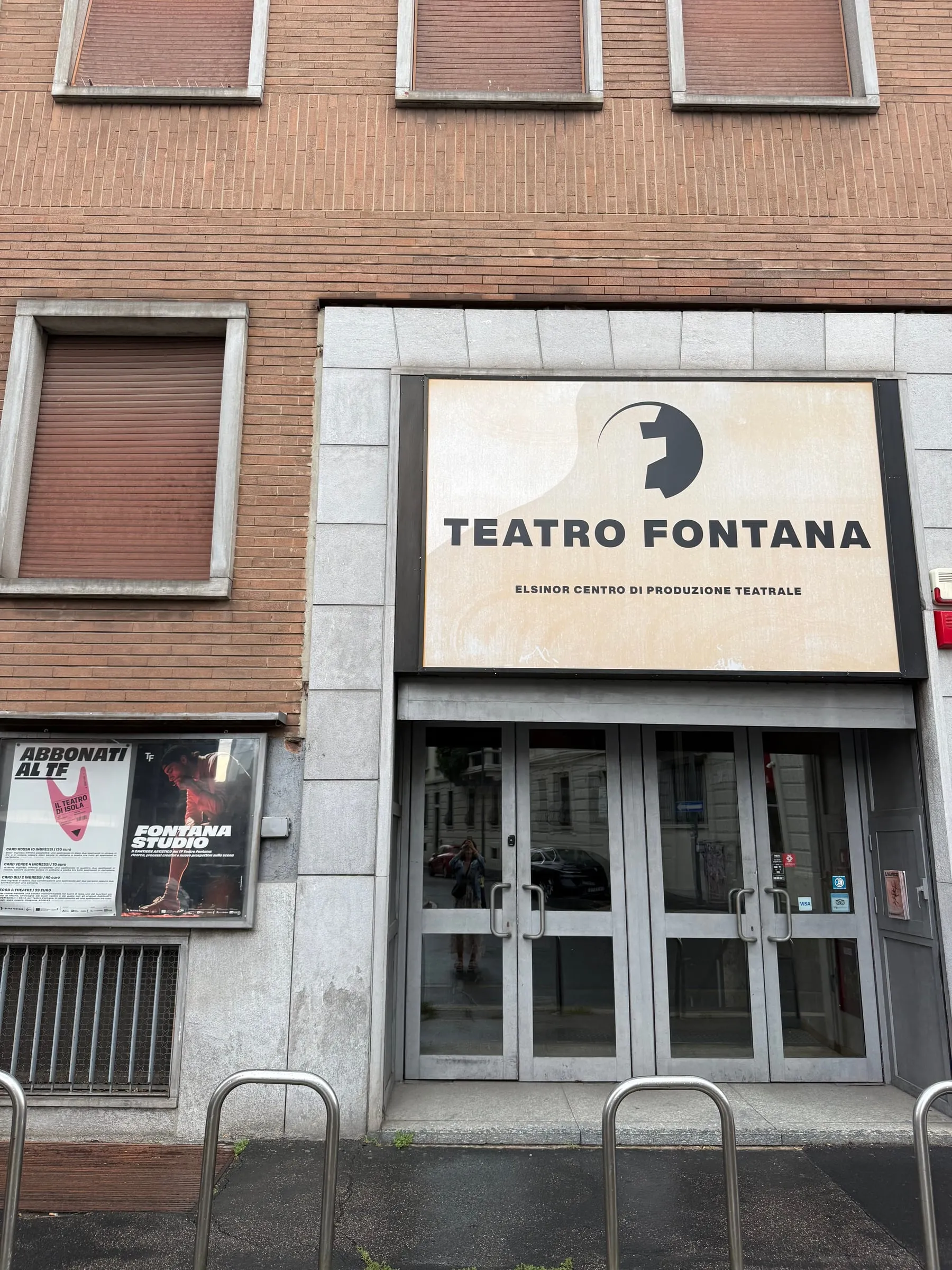
In the heart of the neighborhood is the Teatro Fontana, at via Gian Antonio Boltraffio 21, one of Milan’s leading theaters, where you can also buy a season pass. The program is made up of niche productions, which is exactly why you go: it isn’t the lineup you find elsewhere. Program and tickets at teatrofontana.it.
Santa Maria alla Fontana
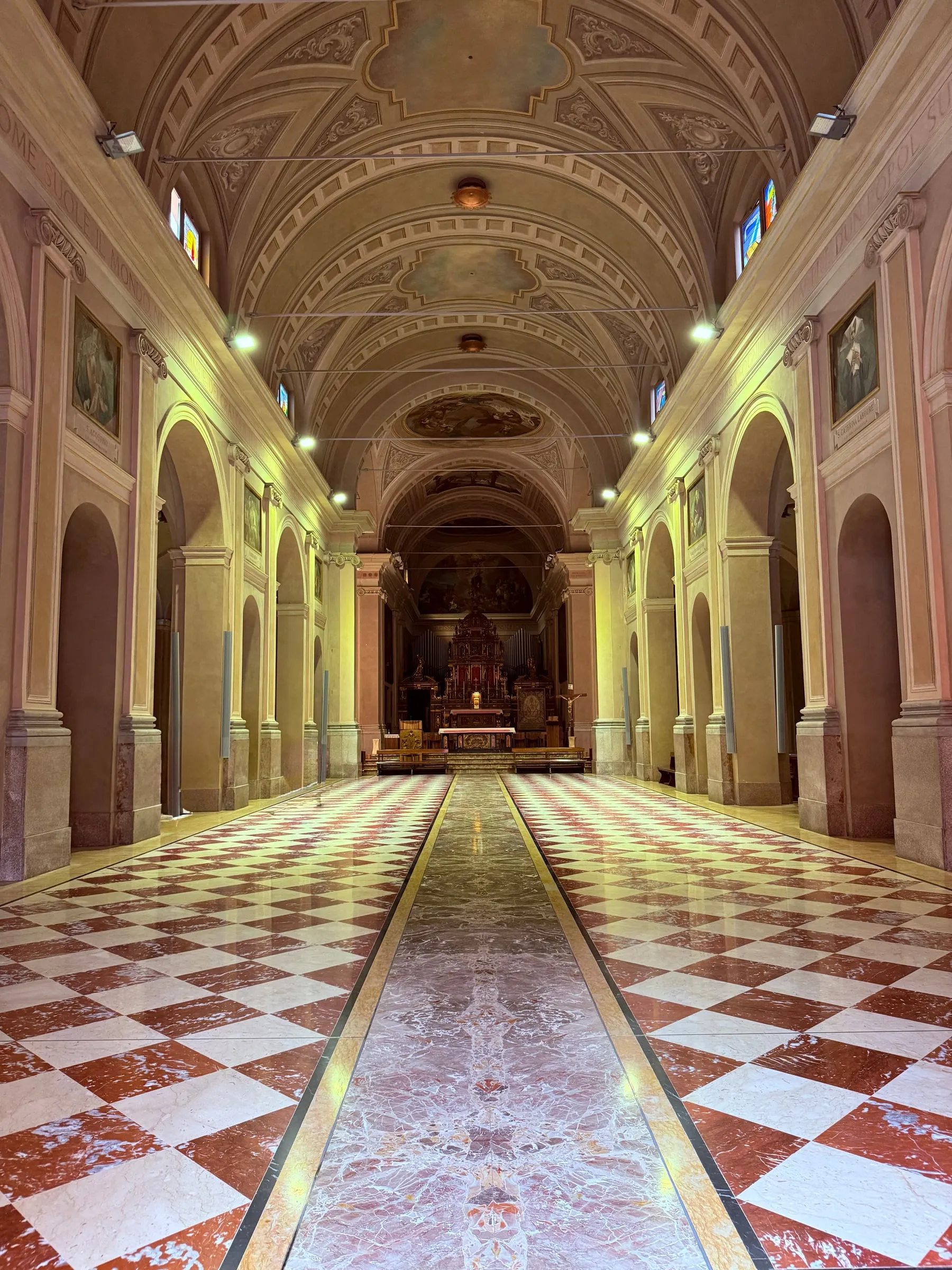
The Teatro Fontana stands next to the church of Santa Maria alla Fontana, a place as old as it is singular in the city, where traditions of medicine, art and faith come together somewhere that has kept all of its atmosphere intact. The sanctuary was built over an old spring believed to be miraculous, known as the “fountain of miracles,” which you can visit in the beautiful frescoed cloister.
An evening at the Blue Note
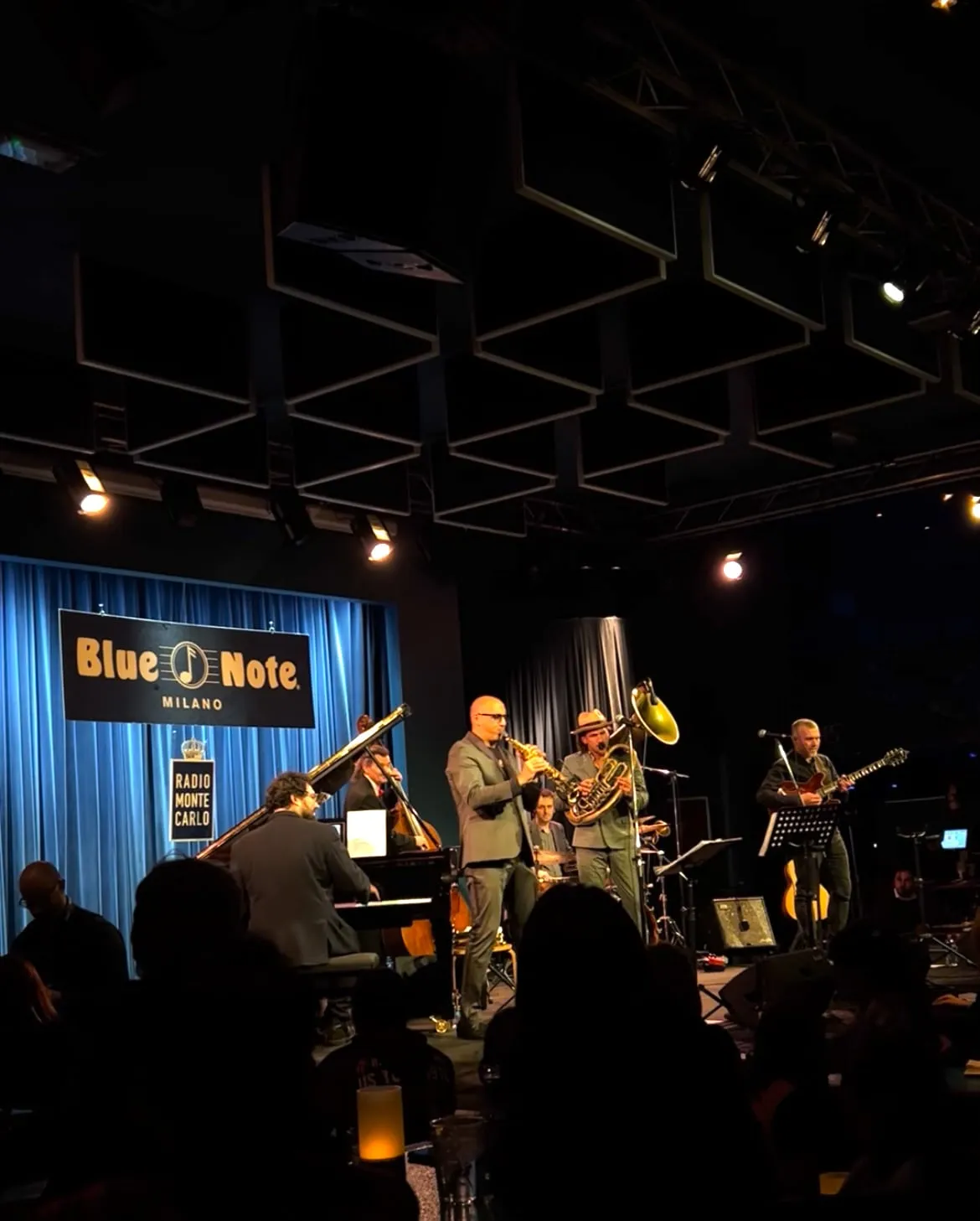
The Blue Note is the best-known jazz club in Italy, twin to the one in New York, and major artists pass through its via Borsieri address. The style is American: narrow tables, banquettes, the stage in the middle and carefully made cocktails, with the audience close enough to see fingers on the keys.
There are usually two sets, an early one and a late one, and the atmosphere differs: the first is more composed, the second looser. You can have dinner at your table during the show, or just take a seat and have a drink. The bill varies a lot depending on the name on stage.
Calendar, prices and bookings at bluenotemilano.com.
The shops and via Borsieri
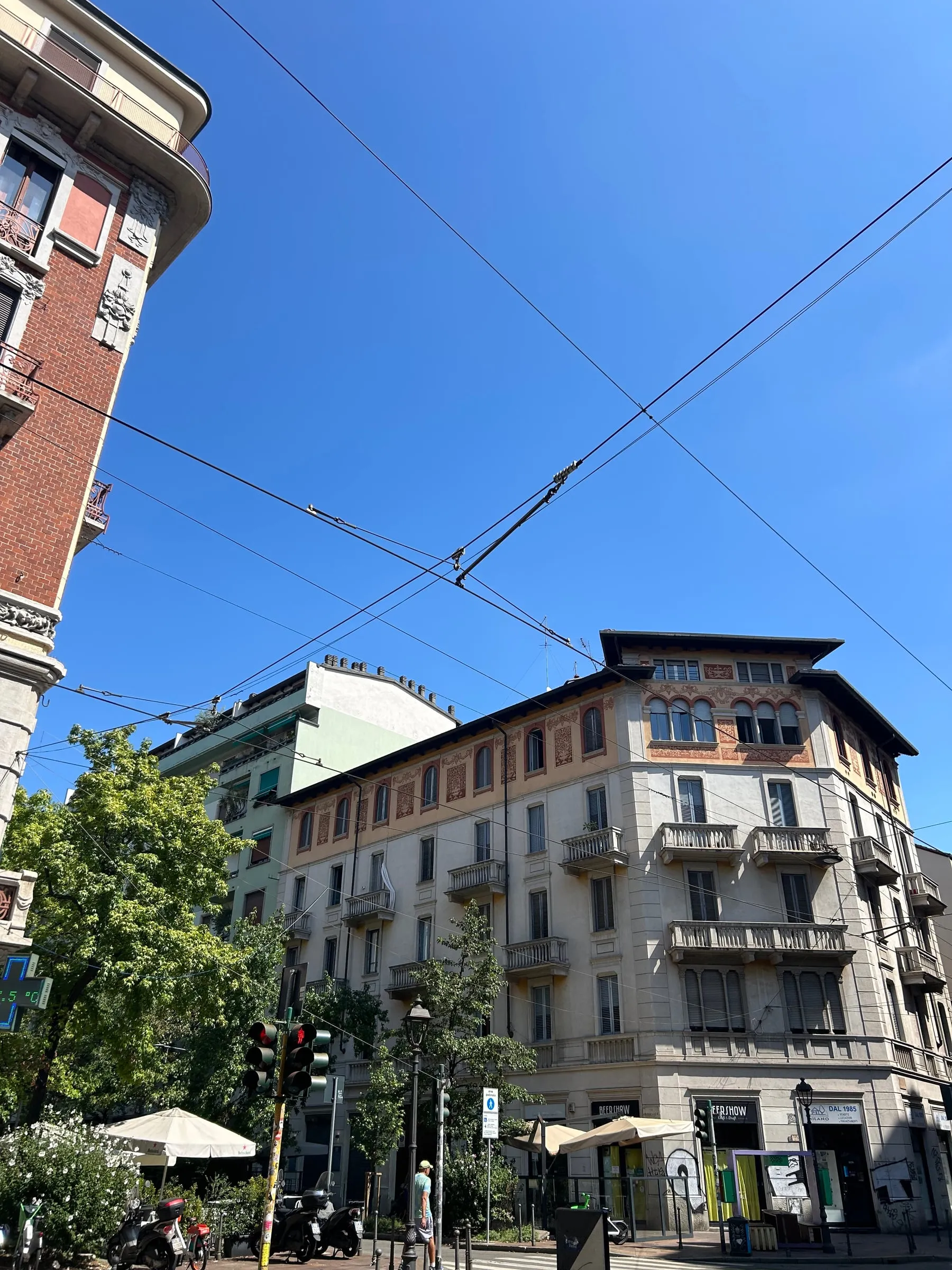
Between Liberty-style buildings and hidden courtyards runs via Borsieri, the main street of Isola: tree-lined, pedestrian in the evening, with tables spilling onto the paving and the towers of Gae Aulenti rising at the far end of the view. It’s the place where you understand the neighborhood in five minutes, because both versions of Milan are in it.
The best time to walk it is the late afternoon, when the shutters are still up but the first glasses are already outside. Walking the whole street takes a quarter of an hour, but it isn’t a street to cross: it’s a street to stop in.
The shops tell a story of their own too. Almost all of them are independent, with a recognizable style, and you’ll find handmade clothes, original jewelry and objects that work as real souvenirs. Our favorites are NON SOLO, Festina Lente, L’Isa, Milano Manifesti and Ernesto Shop Isola. For vintage, Hello Vintage, Room37 and Ambroeus Milano.
The two markets of Isola
There are two different markets in Isola, and it’s worth not confusing them: one is a street market open two days a week, the other is covered.
The street market
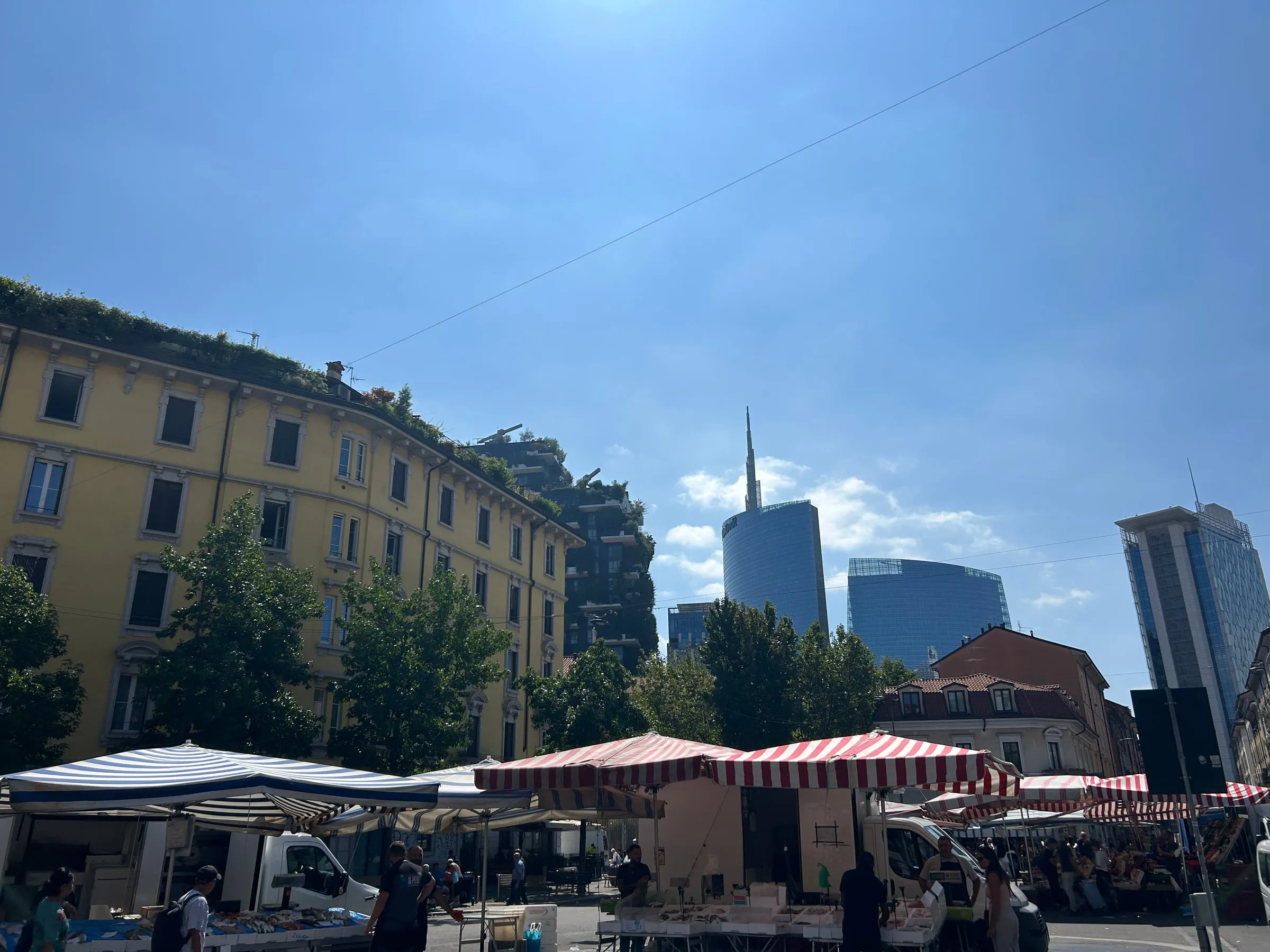
The Isola market is one of the few genuine street markets left in central Milan, and walking through it is an experience in itself. It runs on Tuesday morning until around 1 p.m., and on Saturday, when it carries on into the late afternoon: it starts in piazza Minniti and stretches into the surrounding streets.
There are fruit, vegetable and fish stalls, local produce and clothing, with prices you can still haggle over. It’s the most direct way to be in the neighborhood the way the people who live here are: go early, around nine, when it’s residents doing the shopping and not tourists.
On the same days, a little further along, there’s also a farmers’ stall with produce from nearby: it’s the right stop for a healthy snack between one wander and the next.
The covered market
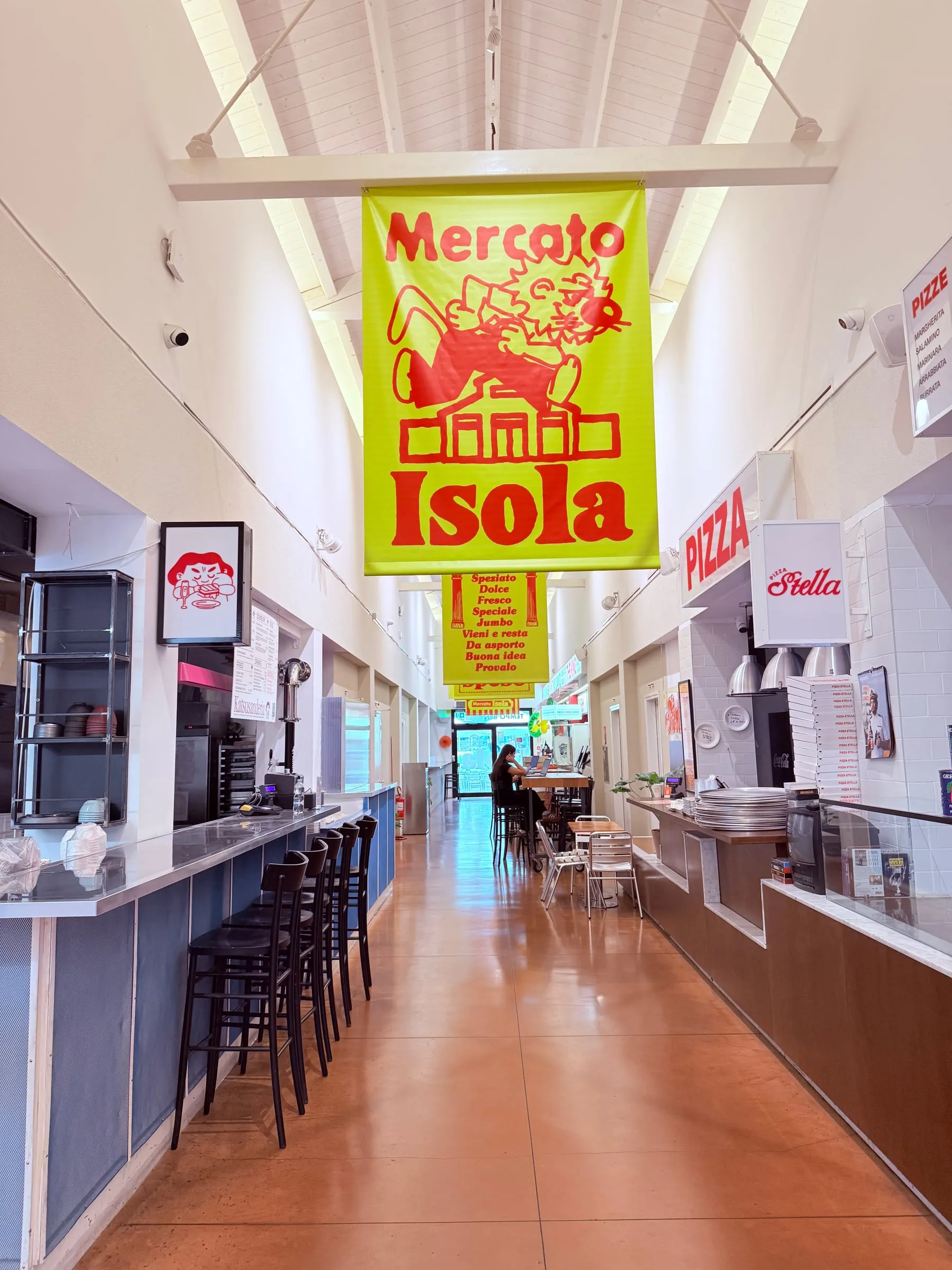
The covered municipal market is where Isola holds its two souls together: the long-established Giannasi deli next to newer names like Panfuwa, which we write about in where to eat. It’s indoors, open from 8 a.m. to 11 p.m., and it sits in piazzale Lagosta literally in the middle of two tram stops, with the trams passing on either side.
You go in to do your shopping and you stay to eat: the stalls have tables in front of them and at lunchtime they fill with people from the neighborhood on their break. That’s when the place is at its best — they do an aperitivo too, but it’s at midday that it comes alive.
The view from Palazzo Lombardia
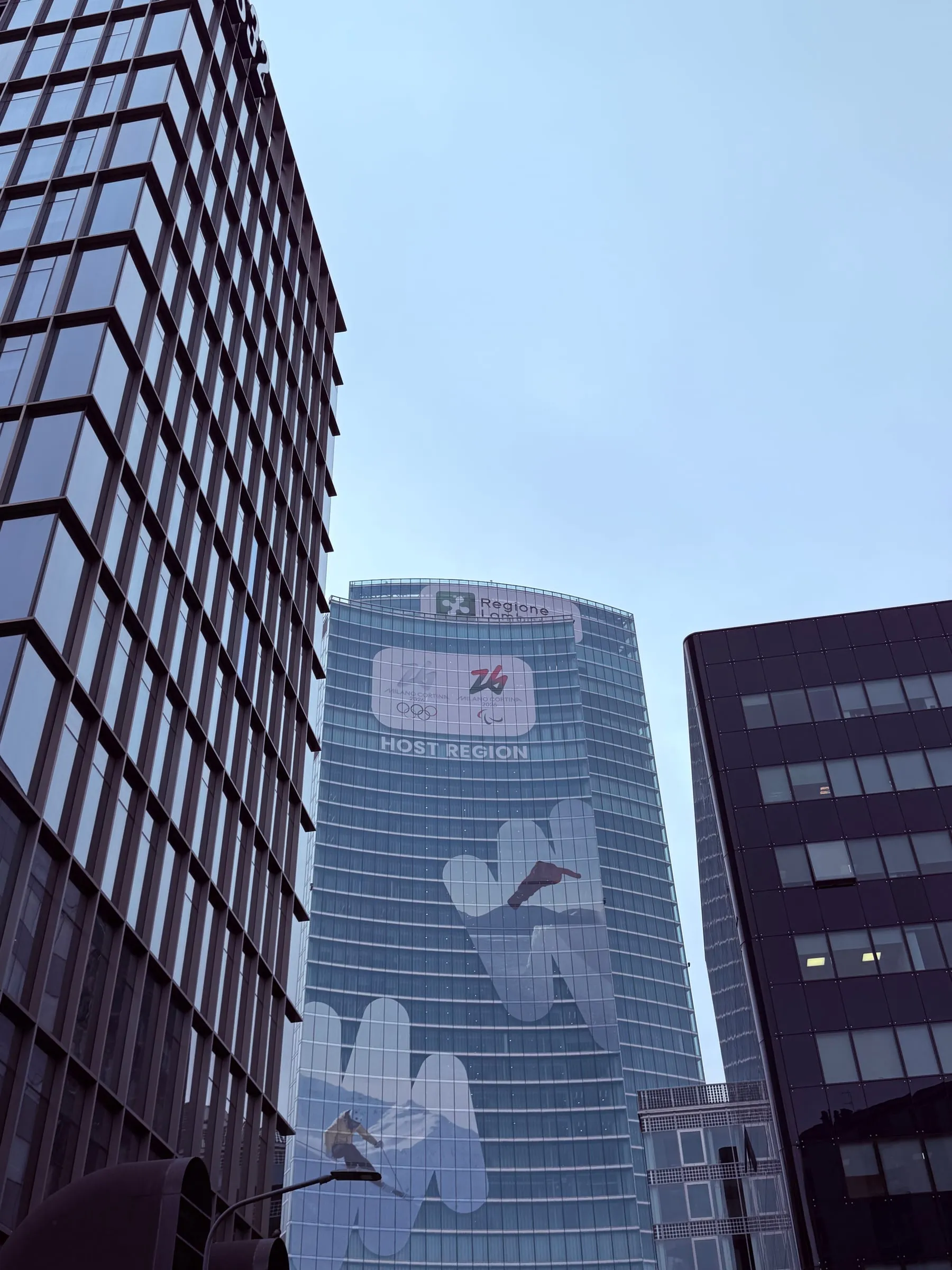
The regional government building is Palazzo Lombardia, recent architecture with a covered inner courtyard that’s worth the stop just to walk through: you pass right by it walking into Isola from Milano Centrale, so there’s no detour involved.
On some Sundays, following a calendar that changes, the 39th-floor viewing gallery opens. It’s one of the highest public viewpoints in Milan, and from up there you can see the Duomo, Porta Nuova from above and, on clear days, the arc of the Alps.
Not to be confused with the Pirellone, which is a different building and stands closer to Milano Centrale.
Map
Isola, Milano
The interactive map needs external scripts and stays off until there is a consent banner. In the meantime the area opens on OpenStreetMap.
Open the area on OpenStreetMap ↗Frequently asked questions
When is the street market in Isola?+
The street market runs on Tuesday, in the morning until around 1 p.m., and on Saturday, when it can go on into the late afternoon. It takes place in piazza Minniti and the surrounding streets, with stalls selling fruit, vegetables, local produce and clothes. The covered municipal market is a different thing: it's indoors and open every day from 8 a.m. to 11 p.m.
Do you have to pay to enter the art galleries in Isola?+
Usually entry is free, apart from special events, which may charge separately.
Do you need to book for the Blue Note?+
Yes, it's worth it: it's the best-known jazz club in the city and the shows fill up fast.

Where to stay in Milan
Isola Urban Hub
Bright loft in the heart of Isola, walking distance from Porta Garibaldi and Bosco Verticale.
Carry on from here
Isola
Where Isola is, how it got its name, what it offers and why it's worth seeing or staying in. A guide to the once cut-off district that is now Milan's new center.
Open ↗Getting here
Getting to the neighborhood from Milan's airports and stations: which service to take, which one is worth it, and other things worth knowing.
Open ↗Where to stay
Which part of Milan is worth staying in, from the center out to the nearby areas where you can spend less than in the best-known neighborhoods.
Open ↗Where to eat
Isola has plenty of places to eat, from Italian classics to Asian food, pizza and aperitivo. At every turn the neighborhood has somewhere worth discovering. Here are the ones we recommend.
Open ↗